Rusty Locks: 4 Ways to Prevent Rust, and How to Free One
Updated October 9, 2026
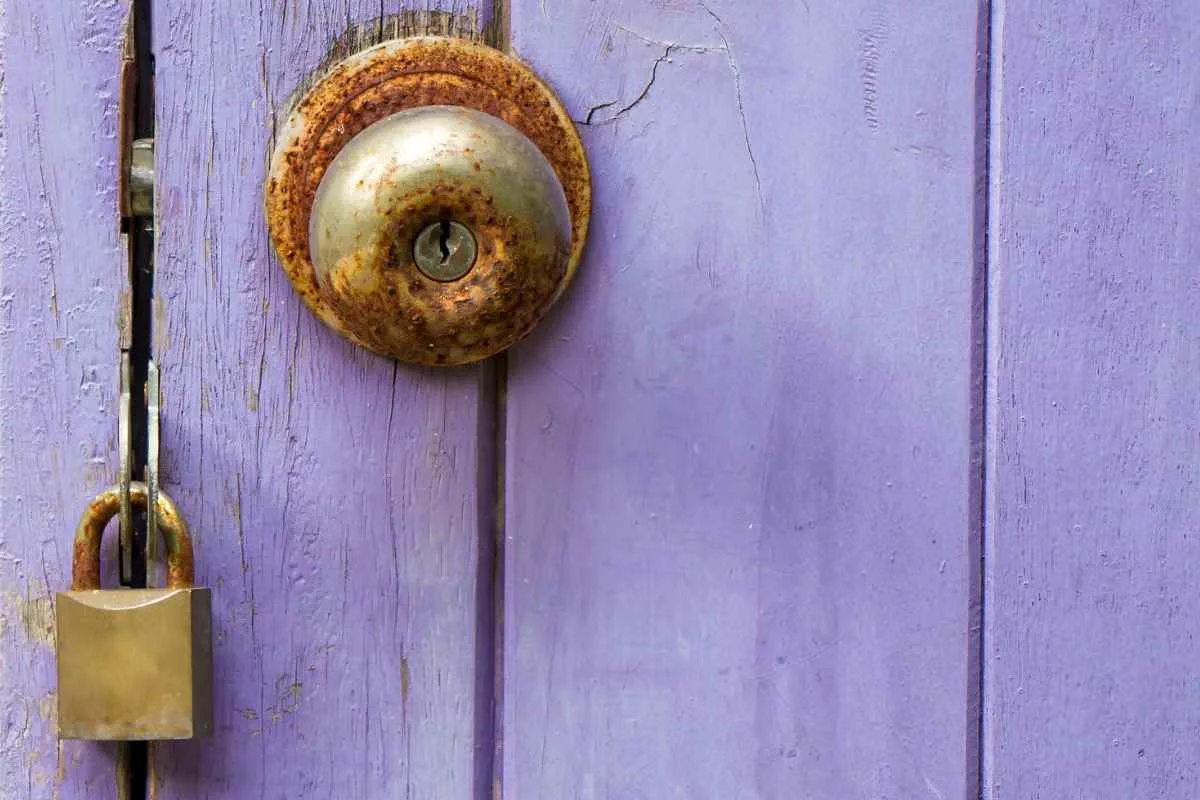
Rust starts wherever bare steel stays wet. Keep a protective film on the metal, keep water off the lock where you can, and use it often enough that nothing has a chance to seize.
Why locks and gate hardware rust
Moisture is the obvious one: rain, sprinklers, wash-down water, drips off a roof edge. A few less obvious sources do just as much damage.
Salt is the big one. Locks near the coast sit in salt air all year, and gates, garage doors and padlocks near a road or driveway get splashed with road salt all winter. Salt holds moisture against the metal and speeds corrosion up considerably.
Condensation catches people out. A lock on a door between heated and unheated space (a garage, a cold storage room, a mechanical room) can sweat on the inside. So can a padlock carried from a cold truck into a warm building.
Mixed metals corrode each other. A steel hasp on an aluminum gate, or steel screws in brass hardware, will corrode faster where the two metals touch and stay damp, especially with salt involved.
Worn plating exposes what’s underneath. Once the plating on a steel lock body or shackle is scratched through, the steel rusts from that spot outward. Brass and stainless bodies hold up better, but the springs, screws and shackles inside many locks are still plated steel.
Four habits that prevent rust
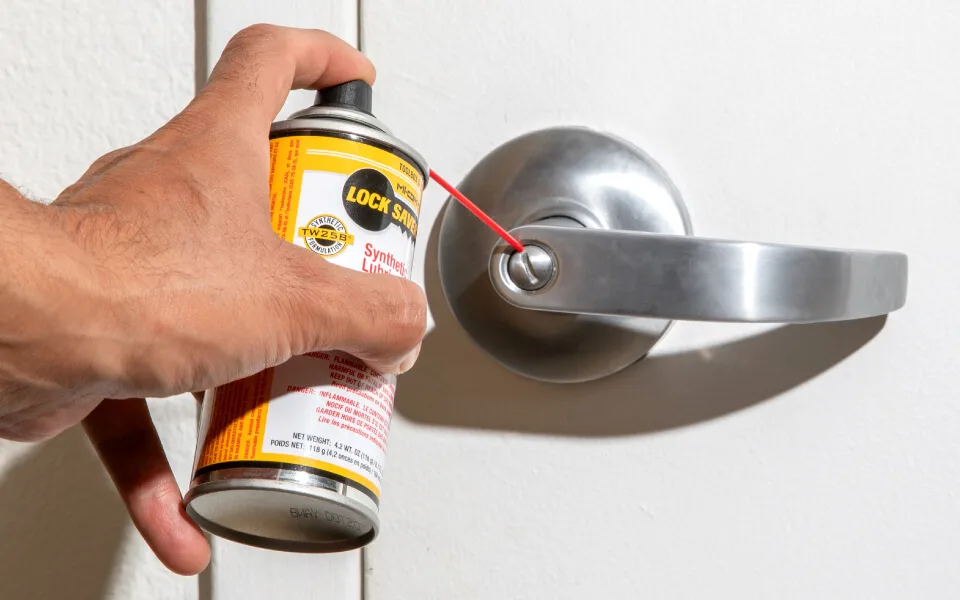
- Keep a film on the metal. Rust needs water and oxygen at bare steel, and a lubricant film keeps them apart. Lock Saver penetrates into metal surfaces and leaves a semi-dry protective film that helps keep rust and corrosion off locks, hinges and chains. Spray the keyway, the shackle holes on a padlock, and the hinges and hasp on a gate. A wet, heavy coat of oil does protect, but it also collects grit.
- Keep water out. Fit covers on exposed padlocks, or hang them with the keyway facing down. Close keyhole shutters if the lock has them. If a door lock sits under a drip, fix the drip.
- Clean, then lubricate. After a winter of road salt, wipe the salt and grime off gate hardware and padlocks and let them dry before you spray. Lubricating over salt just seals it in.
- Use the lock. Working a lock moves the lubricant around and breaks up early rust before it locks the parts together. Padlocks and gate locks that sit for months are the ones that seize. Open them every few weeks even when you don’t need to.
For facilities with dozens of gates and padlocks, buying by the case and doing them all on one round is usually easier than chasing them one at a time. See commercial orders.
How to free a lock that has already rusted
- Penetrate. Spray into the keyway, around the bolt, and into the shackle holes of a padlock. Give it time to soak in. On a badly seized padlock, spray again and leave it longer.
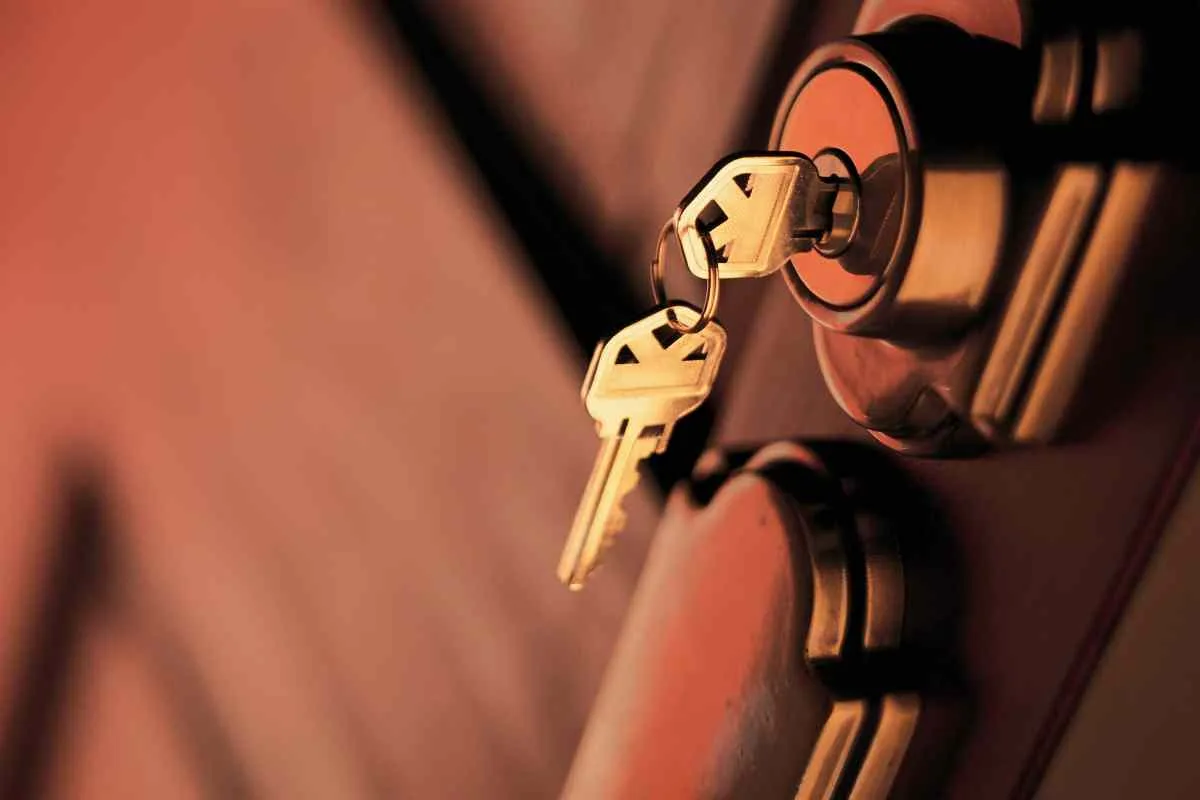
- Work it free. Insert the key and rock it gently back and forth without forcing it. On a padlock, press the shackle down into the body while you turn the key, which takes the load off the locking parts. Light taps on the body with the handle of a screwdriver can help break up rust inside.
- Clean. Once it moves, cycle it several times and wipe off what comes out. Brown or orange residue is rust coming loose. Spray and cycle again until the residue comes out clean.
- Protect. Finish with a light coat, wipe the excess, and put the lock back on the schedule above.
If the key turns but the lock still drags, our sticky lock guide covers the other causes.
When to replace it instead
Replace the lock if:
- The shackle or the cylinder face is pitted. Pitting is metal that is gone, and a pitted shackle is a weaker shackle.
- The key turns but the lock no longer latches every time.
- It guards something that matters: an exterior door, a cage, a gate in front of equipment. A lock you had to fight open is not one to trust with that.
When you replace it, pick a brass or stainless body for exposed spots, avoid mixing metals at the hasp, and fit a cover from day one.
If you had to soak and tap a padlock to get it open, keep it for the woodpile gate and buy a new one for anything that needs to stay locked.