How to Lubricate a Lock, Step by Step
Updated October 9, 2026
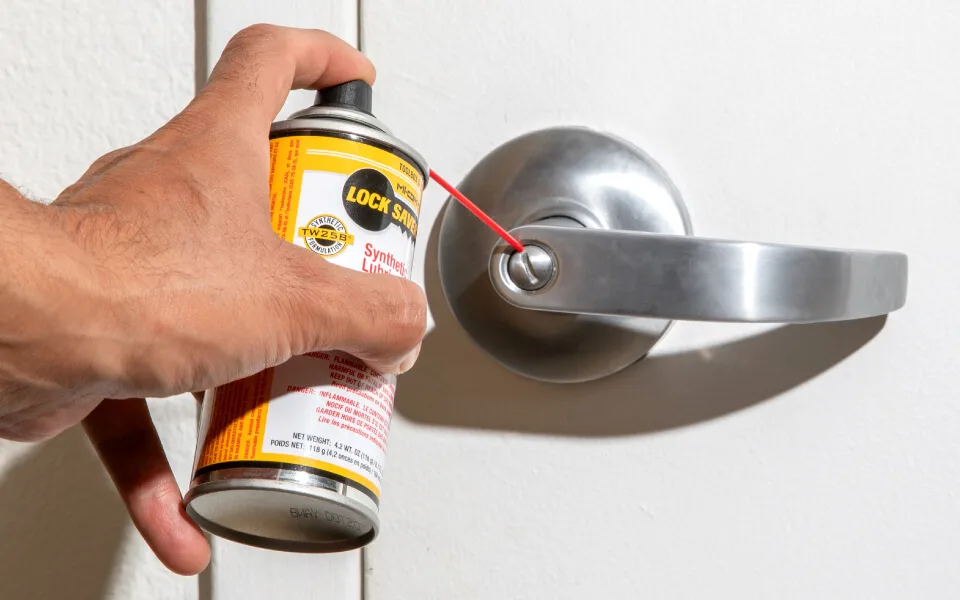
To lubricate a lock, clear the keyway, spray one short burst of lubricant into it, then work the key in and out and turn it several times before wiping off whatever comes back out. The step most people skip is the wipe, and it decides whether the lock stays smooth or gums up by spring.
What you need
- A lock lubricant in an aerosol with an extension straw, so the spray goes into the keyway instead of onto the door
- A clean, lint-free rag
- The best key you have for that lock (a worn copy can hide problems)
- For a dirty outdoor lock, a can of compressed air helps
Which lubricant to use
You want something that goes in thin and doesn’t stay wet. Graphite powder works in clean, dry indoor locks but cakes when it gets damp. Household oils stay wet and collect grit, which is how a lock gets stiffer a few months after oiling. A silicone-based lubricant is water resistant and a fair choice for exterior locks, though some silicone sprays leave a slick coat that holds dust in the keyway. Types of lock lubricant compares them all, and silicone vs oil takes that question on its own.
Lock Saver is the one we make: a synthetic (TW25B) that penetrates into the metal and leaves a semi-dry film instead of an oily coat, with a red straw that fits keyways. If the lock manufacturer specifies a lubricant for its cylinders, use theirs.
Door knobs, levers and deadbolts
These are pin-tumbler locks: the key lifts a row of small spring-loaded pins, and the pins are what stick.
- Clear the keyway with a short burst of lubricant or compressed air. Wipe the key too, because a grimy key loads dirt straight back in.
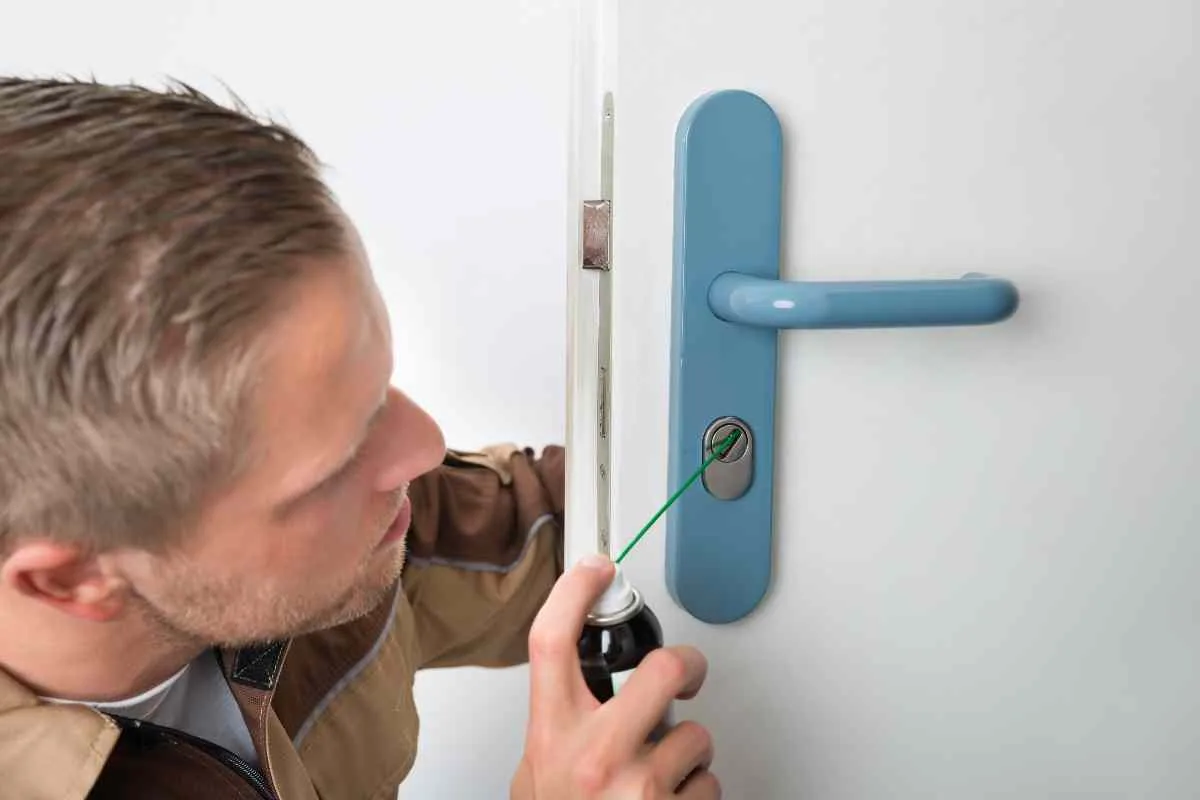
- Aim the straw along the side of the keyway that the key’s cuts face. That is where the pins are. Give it one short burst.
- Push the key all the way in and pull it out five or six times, then turn it fully in both directions a few times.
- Wipe the key. If it comes out dark, spray, cycle and wipe again until it comes out close to clean.
- With the door open, extend the deadbolt or latch and give it a light coat. Run it in and out.
- Wipe the faceplate, the trim and the floor below. Lubricant left on the outside only catches dust.
If the lock turns easily with the door open but binds when it’s shut, the strike plate is out of line and no lubricant will help. Sticky locks goes through those causes.
Padlocks
A padlock has two places that need attention: the keyway and the holes where the shackle enters the body.
- Spray the keyway and cycle the key as above.
- Open the lock and spray a short burst into each shackle hole.
- Open and close the shackle several times, then lock it and open it with the key.
- Wipe the shackle and body. A thin film left on the outside of an outdoor padlock helps with rust (more in preventing rust in locks).
Combination locks
Combination padlocks and dial locker locks have no keyway, so the lubricant goes in through the gaps.
- With the lock open, spray into the shackle holes.
- On a lock with number wheels, mist the seam along the wheels. On a dial lock, spray behind the dial where it meets the body.
- Spin each wheel or the dial through its full range several times, then open and close the lock on the combination a few times.
- Wipe the outside, numbers included.
Safe locks and high-security dial locks are a job for a safe technician.
How often
An indoor lock at home is usually fine with once a year. Do it more often when the lock:
- is outdoors, on a gate, shed, storage unit or exterior door
- gets heavy traffic, like the entrance doors at a school, hospital or apartment building
- sits near salt air or road salt
- has to work through winter (do those in the fall, before the first freeze; see winterizing your locks)
A key that drags going in, a cylinder that needs a wiggle or a deadbolt that grinds needs attention now, whatever the calendar says. For buildings with many doors, lock maintenance for facilities covers scheduling, and case quantities go through commercial orders.
What not to do
Don’t flood the lock: one short burst per opening, then wipe. Don’t spray a wet product on top of years of old graphite, because the two make a paste. Flush a heavily graphited lock with several short bursts, wiping the key between each, before you change products. And don’t force a key that won’t turn, which is how keys snap off inside cylinders.
If a lock still needs a wiggle after two careful rounds of this, the pins or the key are worn, and more lubricant won’t change that.