Types of Lock Lubricant, and Where Each One Fails
Updated October 9, 2026
A good lock lubricant goes in thin enough to reach the pins and then leaves a film that doesn’t stay wet. Most common types manage one of those and not the other. A lock cylinder is a hard place for any of them, with tight clearances and a keyway open to whatever the wind carries in.
Viscosity is the trade-off underneath the whole comparison. Thin fluids get into the pin chambers. Thick ones stay where you put them. A lock needs the first, and then it needs the thin stuff to stop being wet.
The comparison
| Type | What it does well | Where it fails in a lock |
|---|---|---|
| Graphite powder | Dry; fine in clean indoor cylinders | Cakes when damp, builds up over years, turns to paste with oil |
| PTFE dry lube | Thin dry film that holds little dust | Light protection against water and rust; needs reapplying more often |
| Silicone spray | Water resistant; safe on rubber and plastic | Some leave a slick film that holds dust in the keyway |
| Light oil | Gets in fast, frees stiff parts | Stays wet, collects grit, gums over time |
| Grease | Stays put on heavy, slow parts | Too thick for pin chambers; packs with dirt |
| Water-displacing spray | Cleans and pushes out moisture | Mostly solvent; little lubricant left once it evaporates |
Graphite powder
Graphite is the traditional locksmith’s choice, and in a clean, dry, indoor lock it works. The trouble starts outdoors. Damp graphite cakes, and years of it pack into the pin chambers. Spray an oil into a lock full of old graphite and you get a gray paste. If you inherit a heavily graphited lock, flush it out before switching to anything wet.
PTFE dry lubes
PTFE dry lubes come in a carrier that evaporates and leaves a thin dry film. Dust has little to stick to, which suits dusty indoor sites. The film does little against water and rust, so on exterior doors it needs topping up more often.
Silicone sprays
Silicone handles water well and won’t hurt the rubber weatherstripping next to the lock. That makes it a reasonable pick for exterior hardware. The catch is the film some formulas leave: slick, slightly wet, and good at holding fine dust in a keyway. Silicone vs oil goes further into this.
Light oils and grease
Household oil is thin, so it reaches the pins and frees a stiff lock quickly. It also stays wet, and a wet keyway collects grit until the lock is stiffer than before. Grease is oil with a thickener added. It belongs on slow, heavily loaded parts like a gate slide or a hinge pin, not in a cylinder, where it packs into the chambers and holds dirt.
Penetrating and water-displacing sprays
These are cleaners first. They break up rust, flush dirt and push water out, which makes them a useful first step on a neglected or wet lock. Most of what comes out of the can is solvent, though, and once it evaporates there is little lubricant left on the pins. Follow them with a real lock lubricant.
Where Lock Saver fits
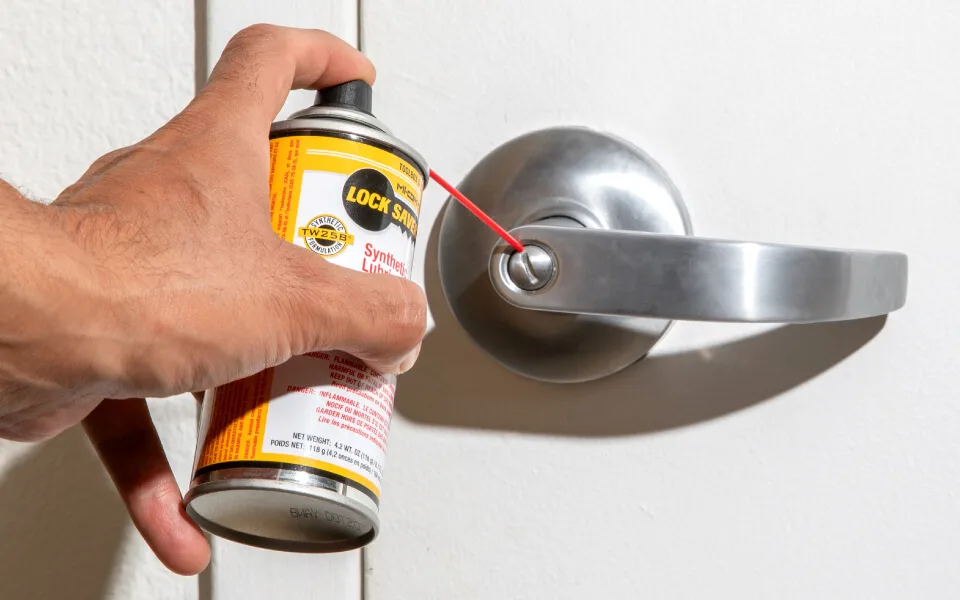
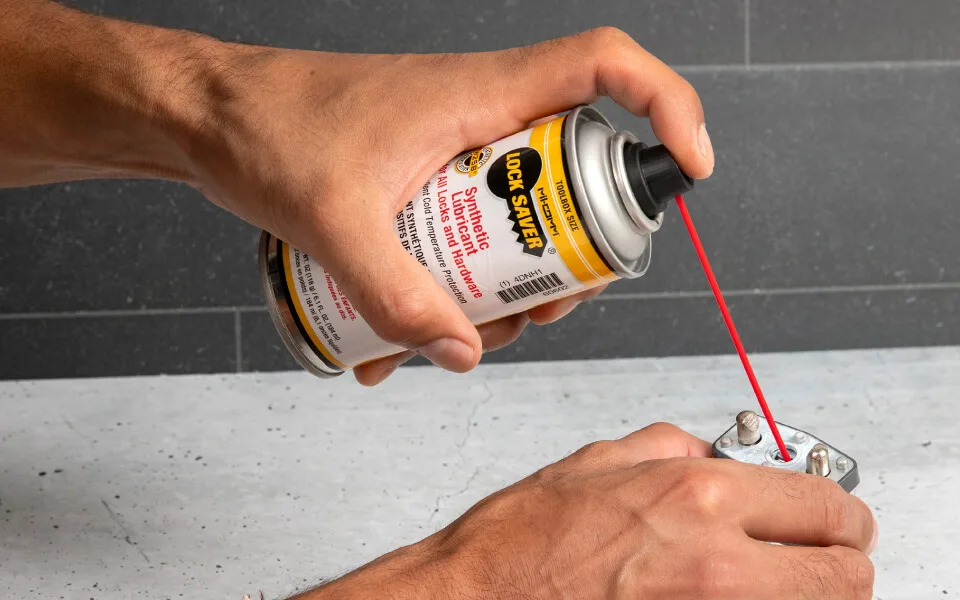
Lock Saver is a synthetic lubricant made with TW25B, MIL-COMM’s formulation. It sprays in thin, penetrates into the metal and leaves a semi-dry protective film rather than a wet, oily coat. That puts it between the dry lubes and the oils: more protection against rust and corrosion than a dry film, without the wet surface that makes oil collect grit, and it doesn’t gum up. The label also calls out cold temperature protection, which matters on exterior doors and outdoor padlocks.
It comes in a 12.65 fl oz (380 mL) can and a 4.2 oz toolbox size, both with a red extension straw for keyways. The label lists hinges, valves, bolt threads, cables and chains as well, so one can covers most of a maintenance cart. Where to buy lists retailers.
It isn’t the answer to everything. If a lock manufacturer specifies graphite or a particular product for its cylinders, especially on high-security locks under warranty, follow the manufacturer. And for a heavily loaded slide you service once a year, grease may simply last longer.
Storing aerosol lubricants
Keep cans somewhere cool and dry, away from furnaces, heaters and direct sun, and out of vehicles in summer. The label warns that the contents are flammable and under pressure, so store them out of reach of children and away from any flame. Keep them upright with the cap on so the nozzle stays clean. The safety data sheet has the full handling details.
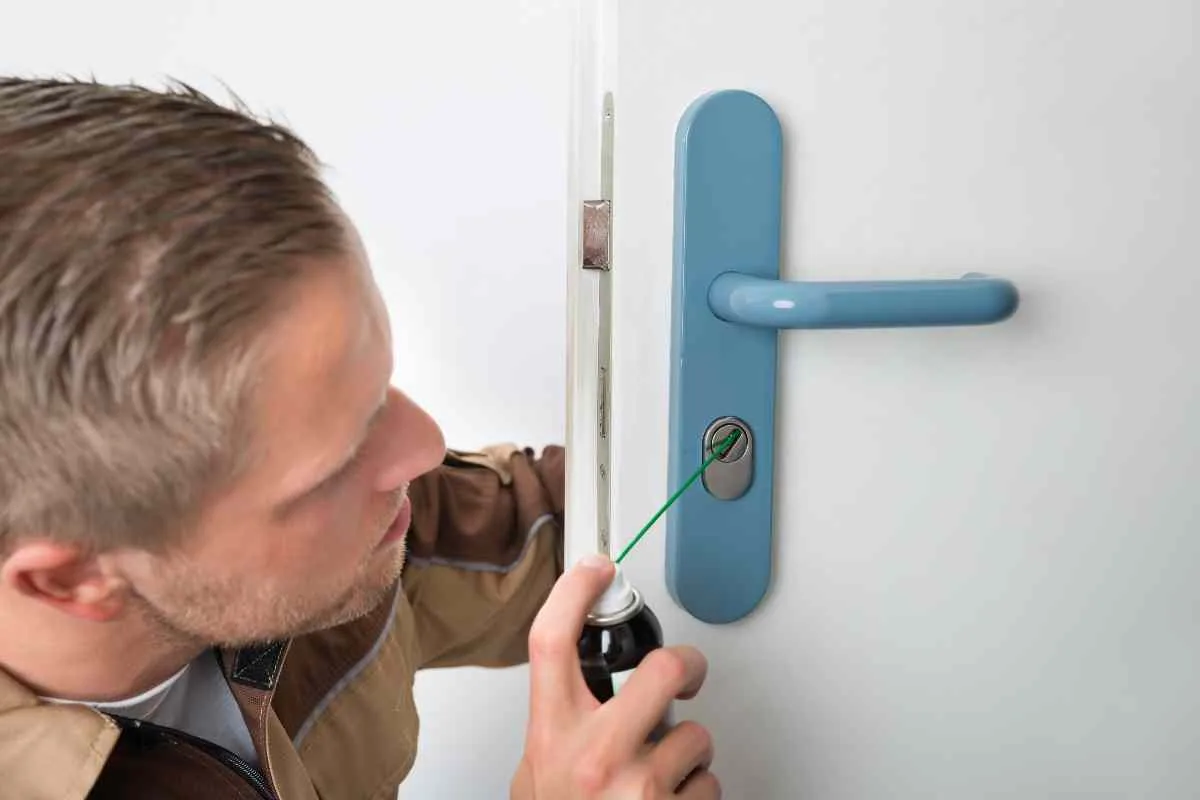
Tape the red straw to the side of the can; without it, the spray ends up on the door instead of in the keyway.