Lock Lubrication Myths and the Mistakes They Cause
Updated October 9, 2026
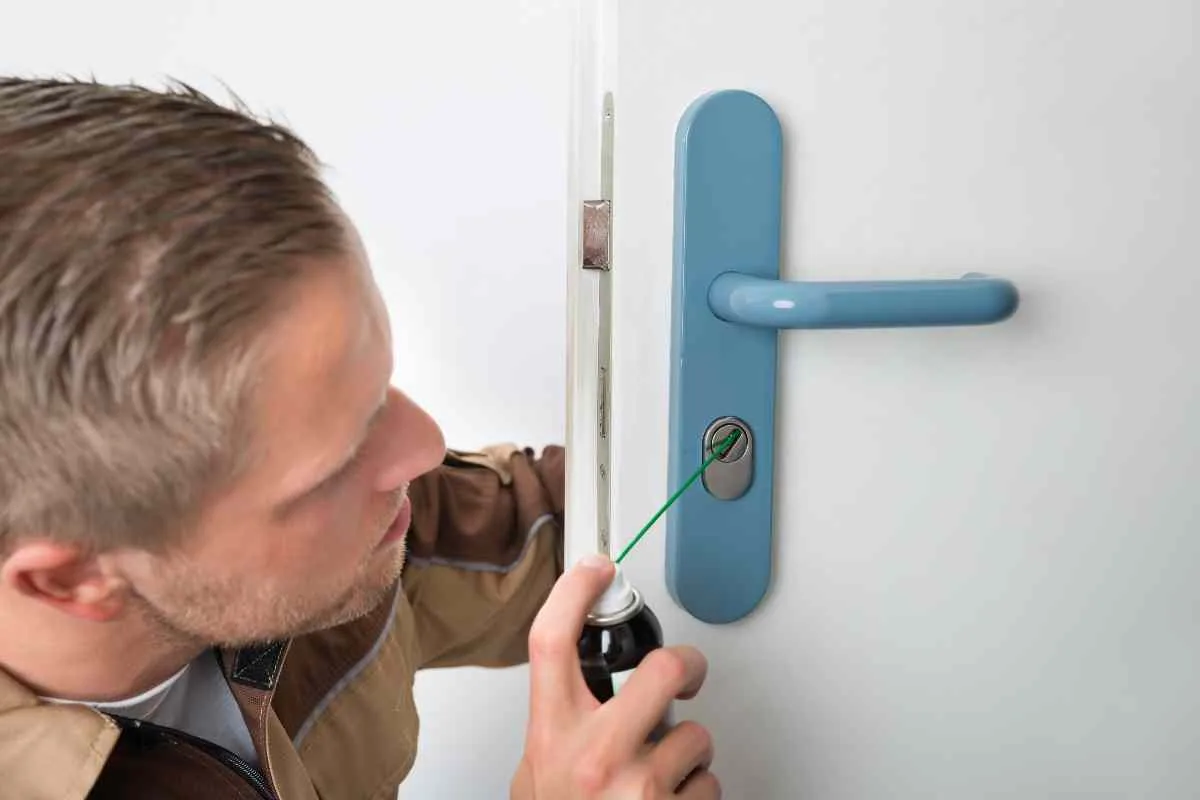
A lock that got worse after someone lubricated it usually got the wrong product, too much of it, or a lubricant aimed at a problem lubricant can’t fix. These six beliefs are behind a lot of it.
Myth: any spray will do
The spray people usually grab first is a water-displacing spray. It’s built to clean and push out moisture, and it does both well. Most of what comes out of the nozzle is solvent, though. Once that evaporates, there’s little lubricant left on the pins, and the light residue it does leave holds dust. The lock feels better for a while, then drags again.
Those sprays have a place: flushing a dirty or wet lock before you lubricate it. Follow them with a lubricant made for locks, one that leaves a film. Types of lock lubricant compares the options.
Myth: more is better
A lock needs a thin film on the pins and the bolt. Everything beyond that sits in the keyway, catches grit, and turns into the black sludge that makes a lock stiff. Signs you’ve overdone it:
- the key comes out dark or greasy
- there’s a wet ring or drip marks around the keyway
- the lock was smooth after lubricating but feels gritty a few months later
To fix it:
- Give the keyway a short burst to loosen the buildup.
- Insert and remove the key several times, wiping it after each pass.
- Repeat until the key comes out close to clean.
- Wipe the face of the lock and the trim.
One short burst per opening is enough. How to lubricate a lock walks through the amounts for each lock type.
Myth: graphite is always best
Graphite has a long track record, and in a clean, dry, indoor cylinder it works fine. It’s a poor fit outdoors. When graphite gets damp it cakes, and years of reapplication pack it into the pin chambers. Spraying an oil on top makes a paste. If the lock maker specifies graphite, use graphite. Otherwise, for exterior and high-traffic locks, a lubricant that leaves a thin film and resists moisture holds up better.
Myth: lubricant fixes a worn or misaligned lock
Lubricant reduces friction. It can’t fix a pin that’s worn, a key cut from a copy of a copy, or a door that has sagged so the bolt rubs the strike plate. A quick test: open the door and try the key. If the lock turns smoothly open but binds when the door is shut, the problem is alignment, and the fix is adjusting the strike or the hinges. If the original key works and a newer copy sticks, the copy is the problem. Sticky locks covers the other causes.
Myth: do it once and forget it
Lubricant gets carried out on the key, washed by rain and diluted by dust. An indoor lock at home may go a year without trouble. An exterior gate padlock, a busy entrance door or anything near salt air needs it more often. For a building full of doors, the reliable approach is a schedule, with exterior and high-traffic locks done each fall before freezing weather.
Myth: a frozen lock needs heat or force
Forcing a frozen key is how keys snap off in the cylinder. Open flame is worse: a lighter or torch on a lock or key can scorch the finish and melt a plastic key head. Hot water thaws the lock briefly, then runs into the cylinder and refreezes.
What works:
- Warm the key in your hand and try it gently, without forcing.
- If it still won’t go, use a lock de-icer or gentle warm air from a hair dryer.
- Once it turns, push out the remaining water with a short burst of lubricant and cycle the key several times.
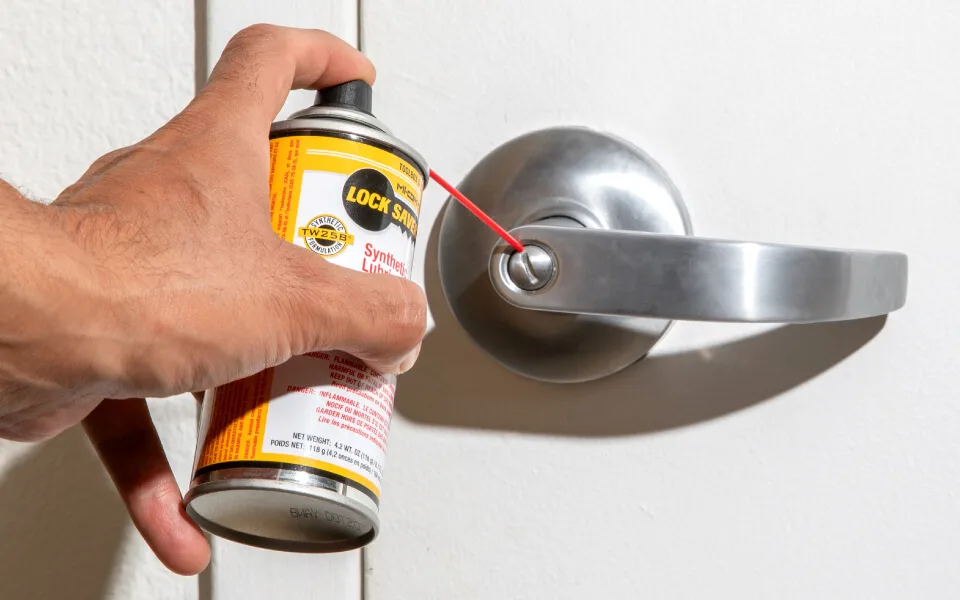
Step 3 is what keeps it from freezing again tomorrow. Lock Saver’s label calls out cold temperature protection, and it leaves a semi-dry film rather than a wet coat. More on cold-weather locks in winterizing your locks.
The lock that froze this morning is the one to treat tonight, while it’s dry and before the next cold night.