The synthetic lubricant made for locks.
Lock Saver goes into the keyway through its red straw, frees sticky pins and leaves a semi-dry film that protects the metal, cold weather included. It works the same way on hinges, cables and chains.
Made by MIL-COMM Products Company with its TW25B synthetic formulation.
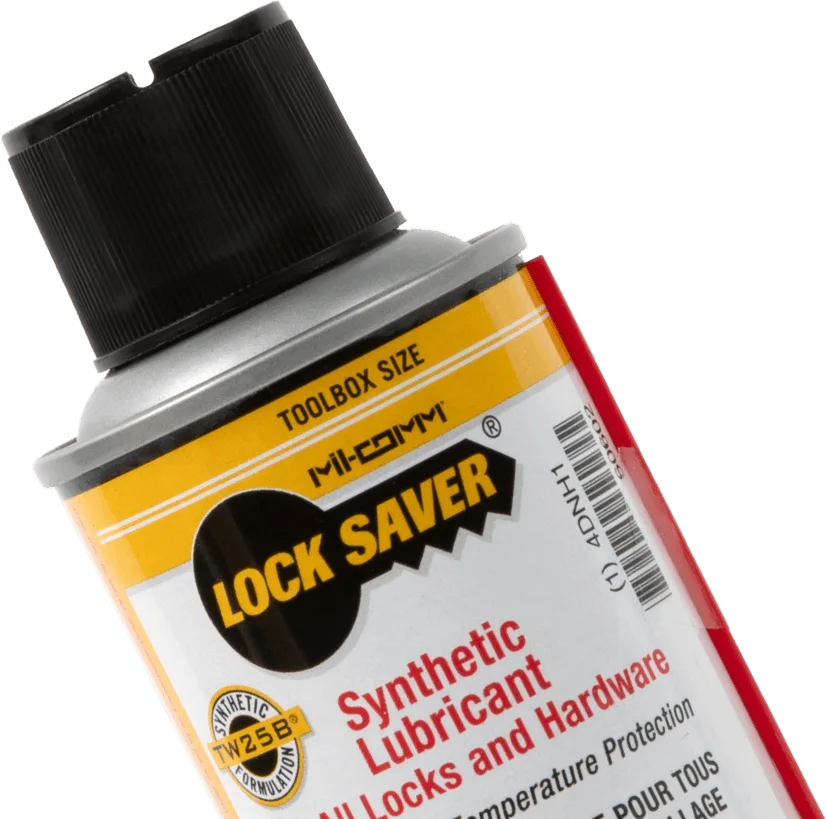
From the label
- Synthetic lubricant for all locks and hardware
- Excellent cold temperature protection
- TW25B synthetic formulation
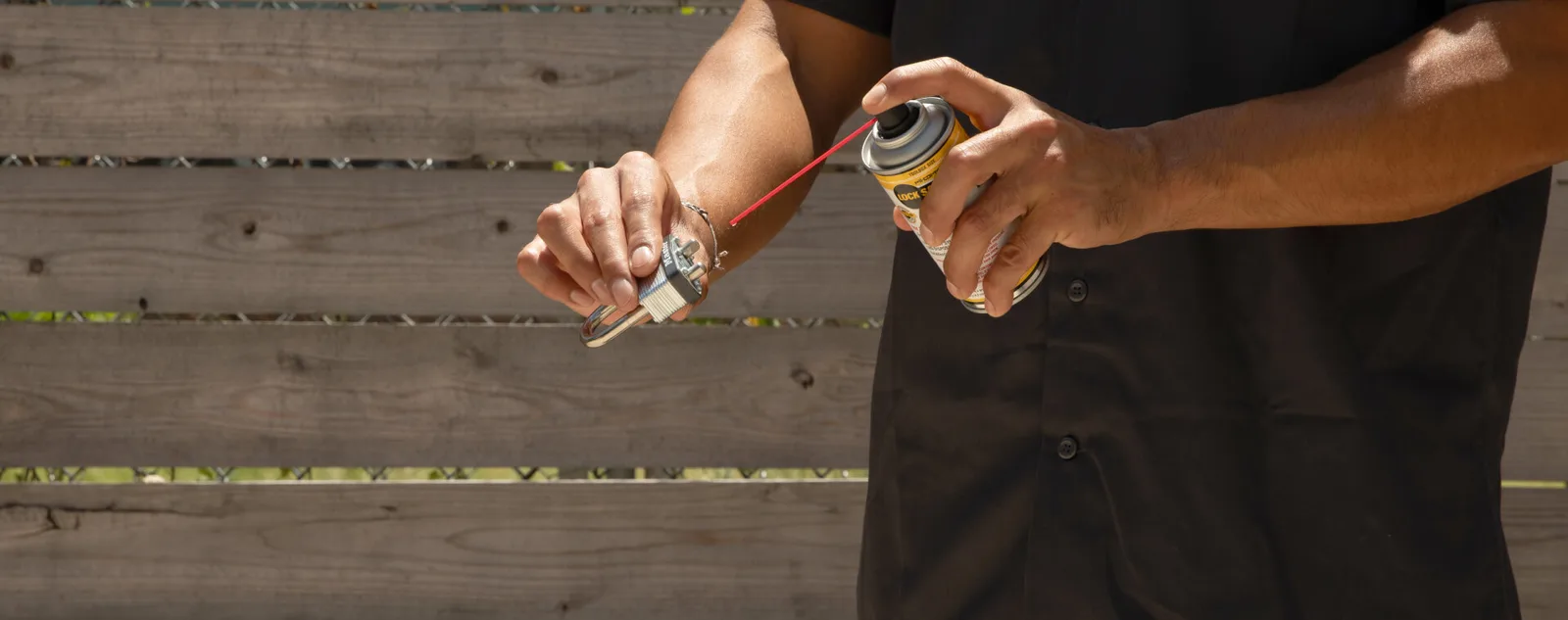
One can for the whole door, and the gate.
Keyways, latches and deadbolts first. Then the hinges the door hangs on, the padlock on the gate and the chain on the bike. The label lists the rest:
- Locks
- Hinges
- Doors
- Valves
- Bolt threads
- Cables
- Chains
Why a semi-dry film works better in a lock.
Inside a pin-tumbler lock, a row of small spring-loaded pins has to slide freely in tight bores every time a key goes in. That is where locks stick.
Household oils free the pins, then hold on to every bit of grit that blows into the keyway. Graphite powder stays dry but can cake once it gets damp. Lock Saver penetrates like an oil, then leaves a semi-dry film that protects the metal without turning into paste.
- 01
Aim the straw into the keyway and give it a short burst.
- 02
Work the key in and out and turn it both ways, five or six times.
- 03
Wipe the key and the face of the lock.
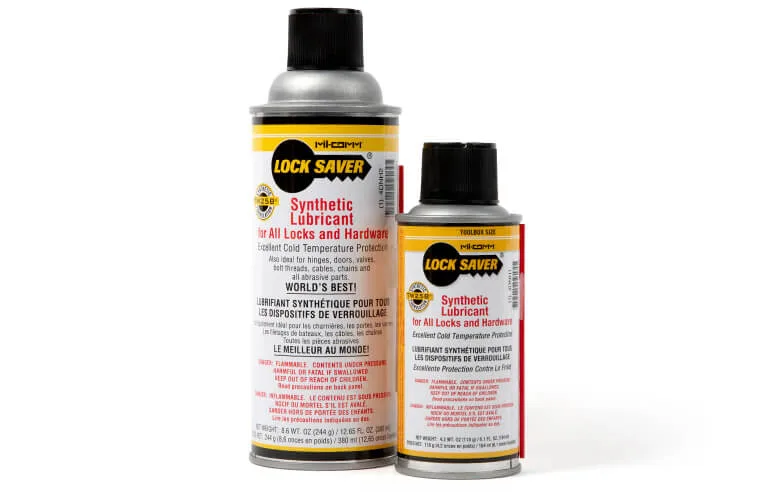
Two sizes. Same formula.
Toolbox size
4.2 oz net wt / 118 g
Fits a pocket, a glovebox or a maintenance cart.
Full size
12.65 fl oz / 380 mL
For maintenance shops and anyone doing a lot of doors.
Buying in Canada or outside the U.S.? Use the commercial order form and include your country and province. The label is printed in English and French.
Facilities teams, locksmiths and distributors order Lock Saver by the case.
Size and quantity
Tell us which can and how many. Pricing comes back by email.
Tax-exempt and PO orders
Say so on the form if the order is tax-exempt or needs a purchase order.
Safety data
Need the SDS for your files first? Request it here.

Fix it yourself.
All guides- 01How to Lubricate a Lock, Step by StepHow to lubricate door knobs, levers, deadbolts, padlocks and combination locks, which lubricant to use, and how often to do it.
- 02Sticky Lock? How to Find the Cause and Fix ItA sticky door lock is usually dirt, old lubricant or a worn key. Try the quick fix first, then check the causes in order of likelihood.
- 03Frozen Locks: How to Thaw Them Safely and Stop the FreezeWhy outdoor locks freeze, how to thaw one without damaging it, and how to keep keyways and padlocks working through winter.
- 04Types of Lock Lubricant, and Where Each One FailsGraphite, PTFE dry lubes, silicone, light oil, grease and water-displacing sprays compared for locks, and where a synthetic like Lock Saver fits.
- 05Lock Maintenance for Facilities: A Simple ProgramHow facilities teams can keep locks, latches and exit hardware working: which doors come first, a seasonal pass, what to log and when to call a locksmith.