Frozen Locks: How to Thaw Them Safely and Stop the Freeze
Updated October 9, 2026

A lock freezes because water got into it first. Rain, melting snow or condensation runs into the keyway, settles around the pins, and turns to ice overnight. Thaw it gently, dry it, and get a lubricant in there before the next freeze.
Why some locks freeze and others don’t
The locks that freeze are the ones that let water in and hold it: exterior doors with no overhang, gate and shed padlocks, and anything hit by drips off a roof edge.
The worst stretch is a thaw followed by a hard frost. Meltwater runs into the keyway during the day and freezes there at night. Old lubricant makes it worse. Household oils thicken in the cold, and graphite powder that has taken on moisture cakes into a stiff paste around the pins.
How to thaw a frozen lock safely
- Don’t force the key. Twisting hard against ice can bend or snap it, and a broken key in a frozen cylinder is a locksmith call.
- Warm the key in your hand or pocket, slide it in, wait a moment, and try a gentle turn. Repeat a few times. The warm key melts the ice closest to the pins.
- If that doesn’t do it, put gentle heat on the lock body: a hair dryer, or a chemical hand warmer pressed against it.
- Once the key turns, work it back and forth until it moves freely, then wipe the lock face dry.
- Lubricate once the lock is dry. Thawing leaves water behind, and that water is tomorrow’s ice.
Two things not to do. Don’t use an open flame on a lock: it can damage the finish, any plastic parts or seals, and the door around it. And don’t pour hot or boiling water over it. Some of that water stays inside, and it freezes again, often worse than before.
If you use a lock de-icer spray, it can wash out whatever lubricant was in the lock. Relubricate afterward.
How to keep locks from freezing
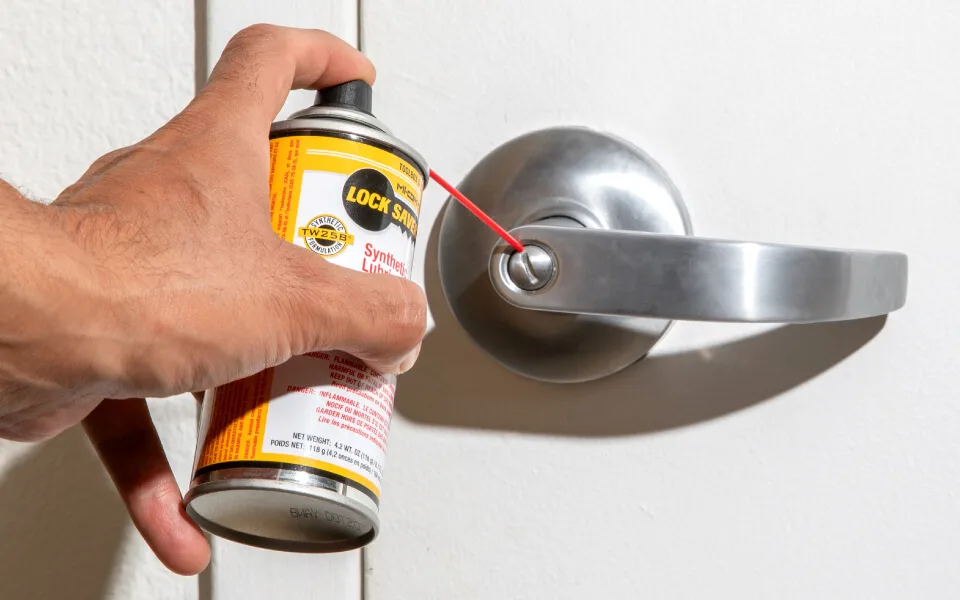
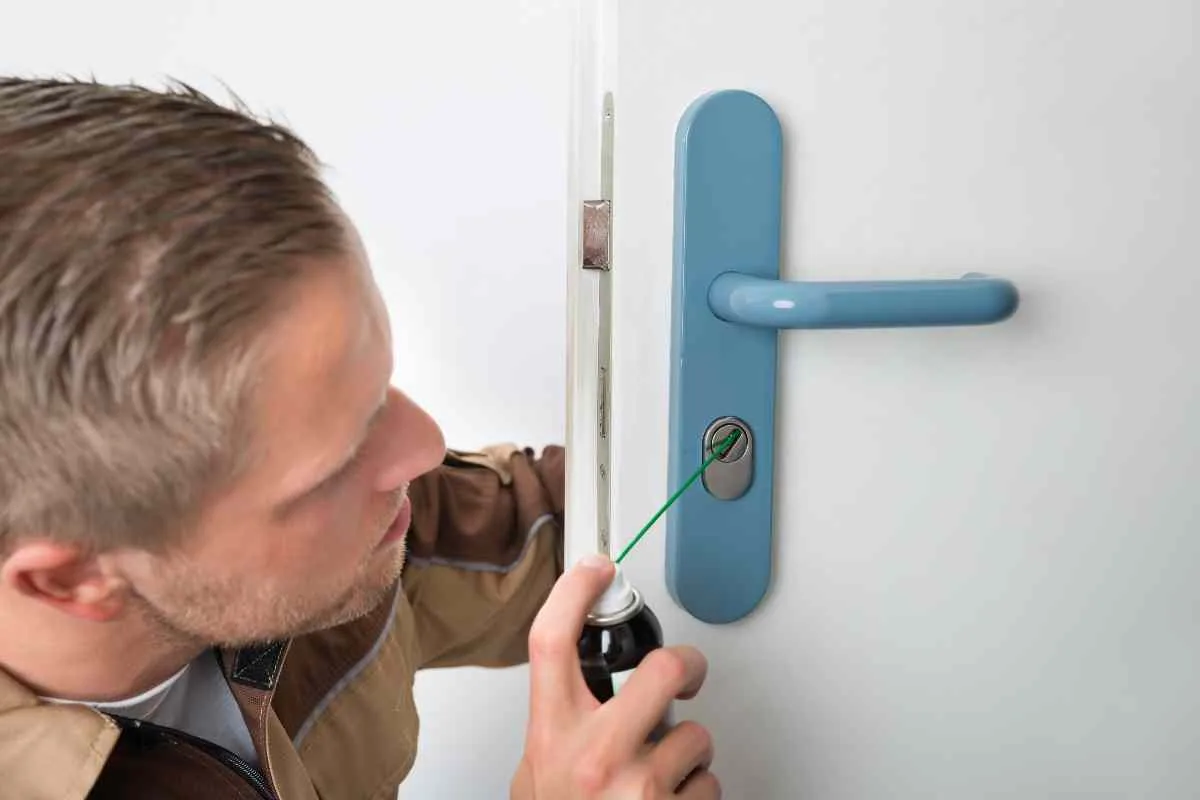
Lubricate outdoor locks before the first freeze of the season. Spray into the keyway through the straw, cycle the key several times, and wipe off the excess. A thin film on the pins gives water less room to sit. Lock Saver’s label lists “Excellent Cold Temperature Protection,” and it leaves a semi-dry film that does not gum up in the keyway.
Lubricate again after a thaw-and-freeze spell, and after pressure washing near the lock.
Cover exposed padlocks. A padlock cover, or simply hanging the lock with the keyway facing down, keeps most of the water out. Spare padlocks belong indoors.
Use the lock. A gate padlock that is opened once all winter is the one that will be frozen solid the day you need it. Cycle it every so often.
Indoor locks and outdoor locks
Indoor locks see stable temperatures and little moisture, so a light lubrication when they start to feel stiff is usually enough. Outdoor locks get rain, dust and wide temperature swings, so they need attention more often, at least before winter and again in spring. Coastal locks need it more often still, because salt air speeds up corrosion. The rust guide covers that side of it.
For facilities teams, the practical step is a fall pass over every exterior door, gate and padlock on the property, done before the first frost. Our facilities guide covers setting up that kind of schedule.
Summer is hard on lubricant too
Heat and direct sun dry some lubricants out, and wet oils thin and run off a hot lock, then catch dust when they cool. A lock on a sun-facing door can run much hotter than the air around it. Check outdoor locks after summer as well, so the fall application goes onto a clean keyway instead of a gritty one.
Spray the gate padlocks and exterior doors in the fall, while the keyways are still dry, and most of the frozen-lock calls in January never happen.