How to Fix a Squeaky Hinge or a Noisy Lock
Updated October 9, 2026
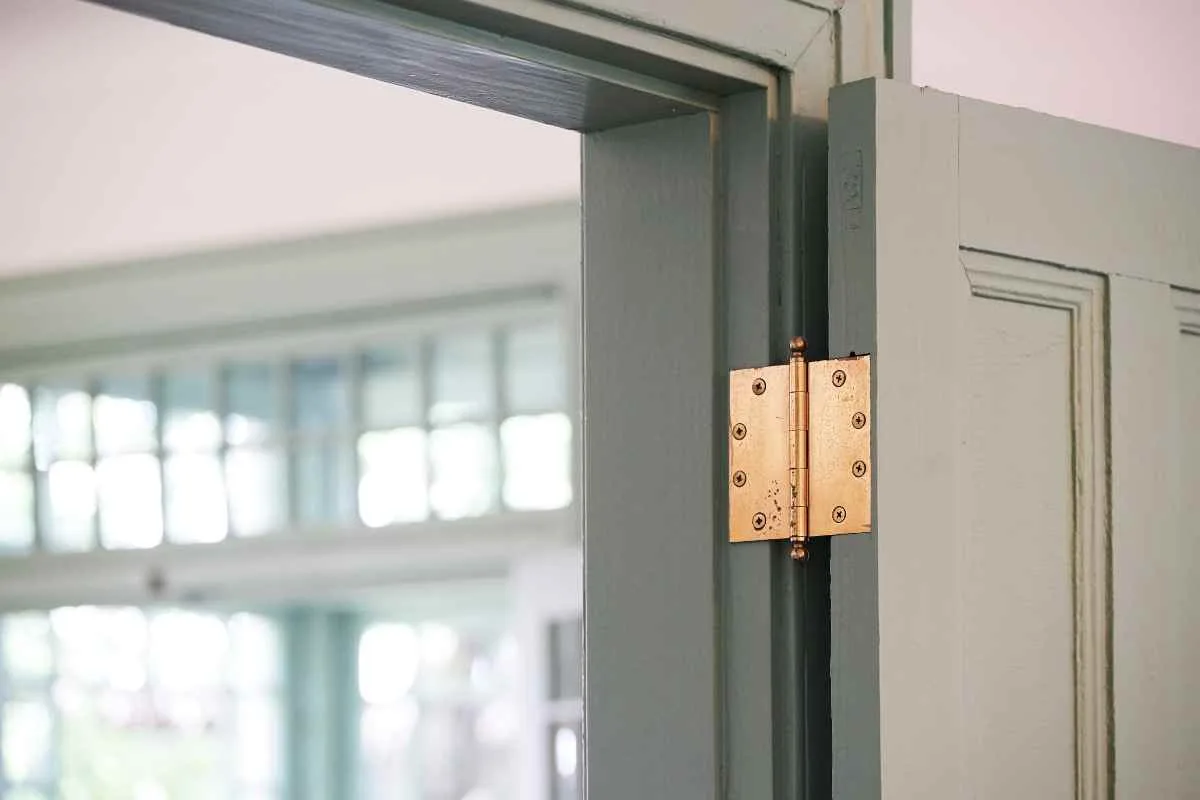
A hinge squeaks because the pin is turning against dry metal inside the knuckles. Clean the pin, put a thin film of lubricant on it, and the noise stops. If it comes back within a few weeks, the problem is usually the way the door hangs rather than the lubricant.
Why hinges squeak
Every time the door swings, the pin rotates inside the knuckles of both hinge leaves. When it dries out, the metal grabs and releases in tiny jerks, and that stick-and-slip is the squeak.
Dust and paint flakes settle at the top of the pin and work down into the knuckle. On exterior doors and gates, moisture adds rust, and a rusty pin can go from squeaking to grinding.
Then there is weight. If the door has dropped even slightly, it pulls on the top hinge and pushes on the bottom one, so the pin is pressed hard against one side of the knuckle. That hinge will squeak no matter how often you oil it.
How to quiet a squeaky hinge
Do one hinge at a time, and keep the door closed while a pin is out so the other hinges carry the weight.
- Find the noisy hinge. Swing the door slowly and listen; it is often the top one.
- Tap the pin up from below. Hold a nail set or a thin screwdriver against the bottom of the pin and tap it with a hammer until you can pull the pin out by hand.
- Clean the pin with a rag. If it is rusty, rub it with fine steel wool until it is smooth. Wipe out the top of the knuckle as far as you can reach.
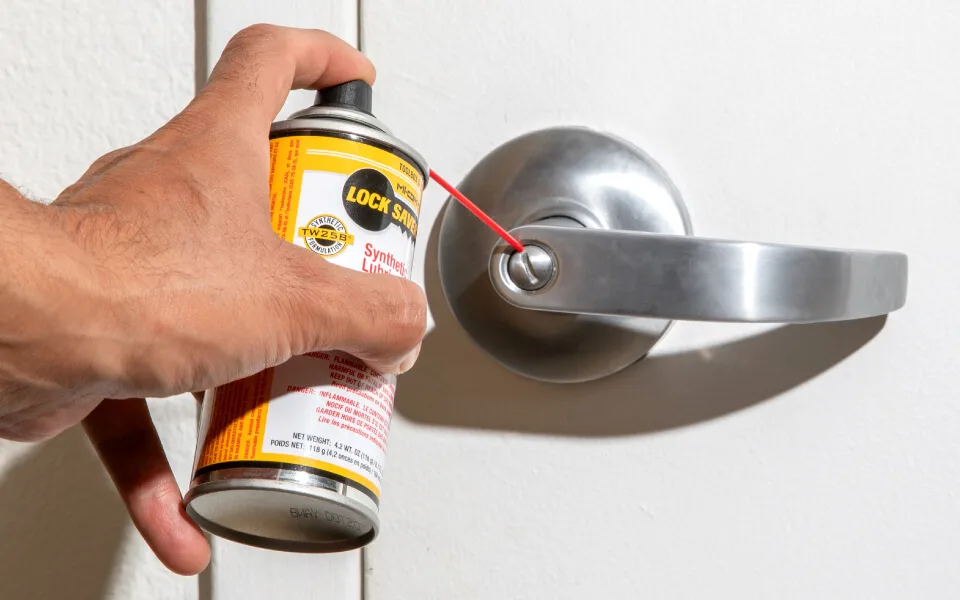
- Spray the pin and the inside of the knuckles lightly. The red extension straw on a can of Lock Saver lets you aim into the knuckle without coating the door.
- Put the pin back and tap it home.
- Swing the door through its full range a dozen times or so to spread the film along the pin.
- Wipe off anything that ran down the leaf, where it would only collect dust.
If the pin will not come out, raise it partway, spray into the gap, tap it down and work the door. It is less thorough but often enough.
Lock Saver is suited to this; its label lists hinges and doors next to locks. It leaves a semi-dry film instead of a wet coat of oil, so the hinge does not gather dust or drip onto the floor, and it helps keep rust off exterior hinges.
When the squeak is the door, not the hinge
If the squeak is back a week after you lubricated the hinge, look at how the door hangs.
- Check the gap between the door and the frame. A gap that is wide at the top on the latch side and tight at the bottom means the door has sagged.
- Look for rub marks on the frame or the top edge of the door. A scraping door can sound like a hinge.
- Try the screws on the top hinge. Loose screws, especially on the frame side, let the door drop. Tighten them, and if one just spins, replace it with a longer screw that reaches the framing behind the jamb.
Lubricating a hinge that is being bent out of line only buys a few quiet days.
Noisy locks and latches
A gritty or crunchy feel when you turn the key usually means dirt in the keyway. Spray into the keyway, insert and turn the key several times, pull it out and wipe it, then repeat. The step-by-step version is in how to apply lock lubricant correctly. If someone has been puffing graphite powder into the lock for years, it may have caked; a few rounds of spraying and cycling the key will flush a lot of it out.
Some clicking is normal. The pins inside a cylinder click as the key passes them. What is not normal is a key that catches or needs jiggling, which is covered in why locks stick.
A latch that drags or snaps loudly into the strike can be a dry latch bolt or a misaligned strike. With the door open, turn the handle and watch the latch. If it moves slowly or sticks, spray it and work the handle. If it moves freely with the door open but drags when the door closes, the latch is rubbing the strike plate, and the fix is moving the strike, not more lubricant. The same test works for a deadbolt: if it throws easily with the door open and fights you with the door shut, it is an alignment problem.
A squeaking lever handle is usually the spring in its base. A short spray where the lever meets the rose, then twenty or so turns of the handle, normally quiets it.