Seven Jobs for Lock Lubricant Besides Locks
Updated October 9, 2026
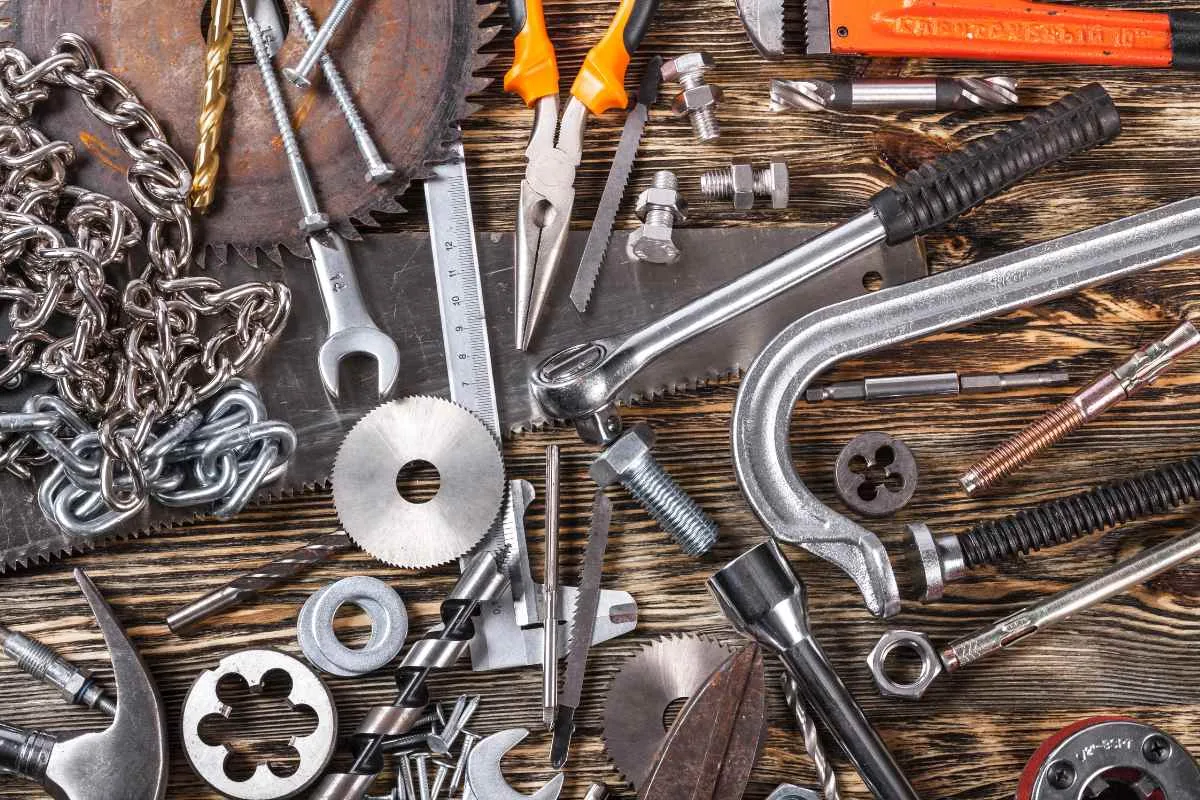
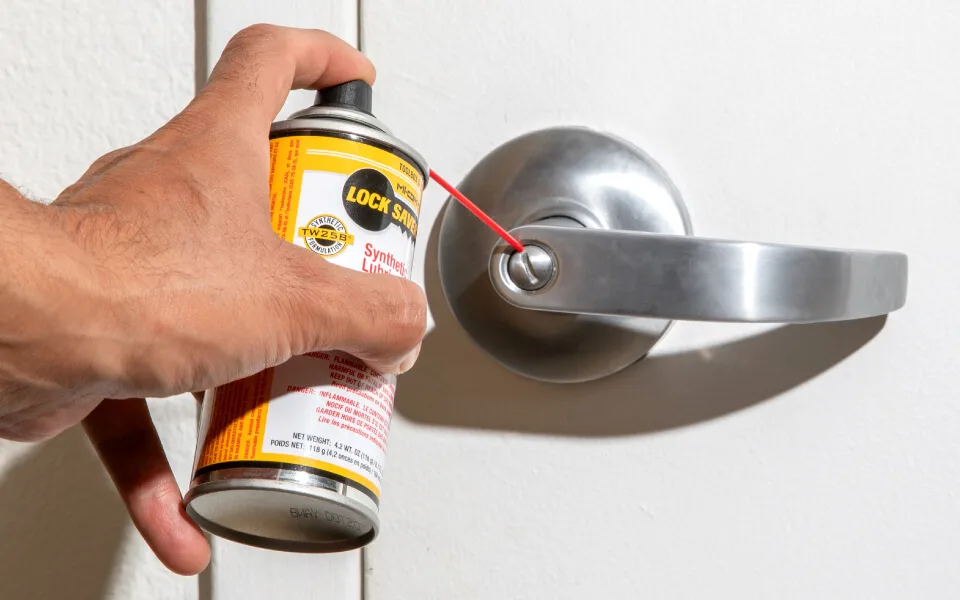
A good lock lubricant works on most small metal parts that slide, pivot or thread together. The Lock Saver label lists “hinges, doors, valves, bolt threads, cables, chains and all abrasive parts,” and that list is a fair guide to where a can earns its place on the shelf. Here are seven of those jobs, then the places it does not belong.
The same habits apply everywhere: clean the part first, apply a little, work the part so the lubricant gets where the metal touches, and wipe off what is left on the outside.
1. Door hinges and closer arms
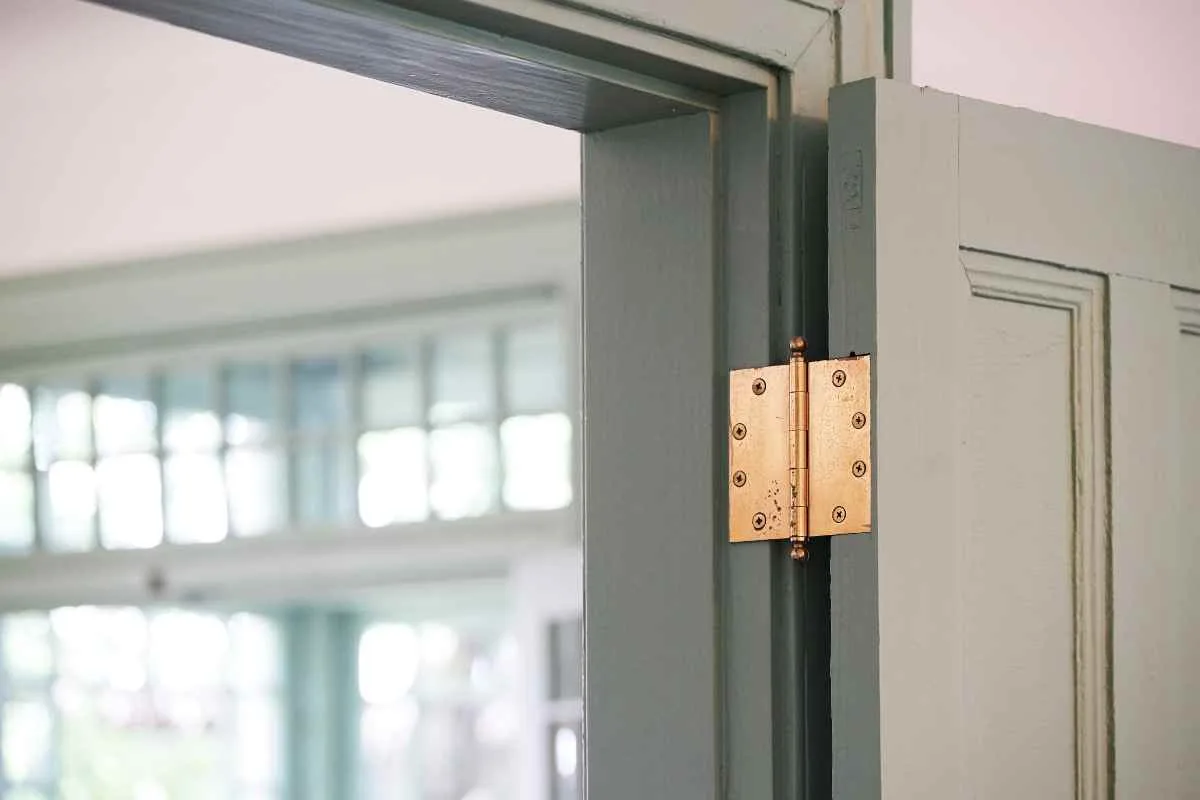
A squeaky hinge needs the pin cleaned and lubricated, and the full method is in how to fix a squeaky hinge. On a door with a closer, spray the pivot points on the arm, where the arm joints bend and where it meets the bracket. Do not spray into the closer body itself. It is a sealed hydraulic unit, and if it leaks or slams, it needs adjustment or replacement.
2. Gate latches and padlocks on outbuildings
Shed padlocks, gate latches and barn door hasps sit outside all year and seize first. For a padlock, spray into the keyway and into the gap where the shackle enters the body, then open and close it several times. For a latch, spray the pivot and the spot where the bar drops into its catch. Doing these in the fall saves you from a frozen padlock in January; winterizing your locks covers the cold-weather side.
3. Bike chains and gate chains
Chains are on the label, and a semi-dry film suits them because it holds less grit than a wet oil. Clean the chain first with a rag (and a degreaser if it is black with old oil), then apply to the rollers while you turn the pedals backward or move the chain through your hand. Wipe the outside of the chain afterward; the lubricant needs to be inside the rollers, not on the plates.
For a commuter bike that lives outside, a gate chain or the chain on a swing, that is all you need. Riders who put serious miles on a performance drivetrain usually stick with a lube made for their specific chain, and that is a reasonable choice.
4. Cables
Push-pull cables on mowers, snow blowers and gate openers get stiff when the inner wire rusts inside its housing. Work the straw into the end of the housing, spray, and move the lever back and forth until it runs smooth. If a cable is frayed or kinked, replace it; lubricant will not save it.
5. Sliding doors and window hardware
Vacuum the track of a sliding patio door before you touch it with anything. Most of the drag is dirt, and lubricant on a dirty track turns into paste. Then apply lightly to the rollers and wipe the track down to a thin film. On windows, the same applies to casement cranks, sash locks and the pivot points on hinged windows.
6. Valves and bolt threads
For a rusted nut or bolt, spray the threads, give it time to soak in, and then try to back it off. A second application and more waiting often beats more force. Stiff valve handles and exposed valve stems, such as an outdoor faucet or a shutoff in the basement, can also take a little on the outside of the stem.
7. Garden and shop tools
Pruners and loppers stiffen at the pivot once sap and dirt build up. Wipe the blades clean, spray the pivot, open and close the tool until it moves freely, and wipe the blades again. In the shop, vise screws and clamp threads get the same treatment. A light coat on tools that are stored in a damp garage helps keep rust off them over winter.
Where not to use it
- Anything that touches food. Kitchen equipment needs a lubricant rated for food contact.
- Brakes. Keep it away from brake pads, rotors and calipers on cars, and from rims and disc rotors on bikes. When you are doing a bike chain, cover the rotor or aim carefully, because overspray on a braking surface is a real hazard.
- Parts with a specified lubricant. If a manufacturer names a particular grease or oil for a gearbox, bearing, opener or engine part, use what they specify. The same goes for fasteners with a torque spec: lubricated threads tighten differently, so do not add lubricant unless the spec calls for it.
- The inside of anything carrying drinking water. The outside of a valve stem is fine; the inside of the valve is not.
The can is flammable and under pressure, so spray in a ventilated spot and keep it away from flame. If you want one can in the shed for the padlock, the gate hinges and the bike chain, the 4.2 oz toolbox size of Lock Saver sits fine next to the pruners, and the where to buy page lists both sizes.