Silicone vs Oil-Based Lubricants: Which One Is Better?
Updated October 9, 2026

Neither wins everywhere. Silicone stays clean and copes with temperature swings; oil penetrates tight mechanisms and clings to metal but holds on to dirt. For a lock, the deciding question is usually how dusty and exposed it is.
Understanding Silicone-Based Lubricants
Silicone lubricants are made from silicone polymers rather than petroleum. They usually come as sprays that leave a thin, slick film.
Properties of Silicone-Based Lubricants
Silicone works across a wide temperature range and resists oxidation, so it does not thicken or turn gummy with age the way some oils do. The film is relatively dry to the touch and does not hold dust as readily as a wet oil. It is also safe on rubber and most plastics.
Advantages of Silicone-Based Lubricants
- Long-lasting, because it resists heat, cold and oxidation.
- Good in dusty places, since grit is less likely to stick.
- Safe on the rubber seals and plastic parts found around many doors and windows.
Disadvantages of Silicone-Based Lubricants
- It generally costs more than plain oil.
- It does not penetrate or cling to bare metal as well as oil, so on heavily loaded or rusty parts it can wear away sooner.
- Overspray leaves a slippery residue that paint and adhesives will not stick to.
Deciphering Oil-Based Lubricants
Oil-based lubricants, mineral or synthetic, are the traditional choice for metal parts.
Properties of Oil-Based Lubricants
Oil wets metal well and creeps into small gaps, which helps it reach pins and springs inside a lock. It clings to surfaces under load. A wet oil film also stays wet, which is why it collects dust, and some oils oxidize and thicken over time.
Advantages of Oil-Based Lubricants
- Penetrates tight mechanisms and frees parts that have started to bind.
- Adheres well to metal under pressure.
- Widely available and usually inexpensive.
Disadvantages of Oil-Based Lubricants
- Holds on to dust and grit, which can turn into a paste inside a keyway.
- Some oils thicken or gum up as they age or get cold.
- Needs wiping after application to keep the excess from collecting dirt.
Silicone vs Oil-Based: The Verdict
- Indoor locks in clean spaces: either works. Use a little and wipe the excess.
- Dusty or sandy places, sliding tracks, rubber seals: silicone, because it stays cleaner.
- Stiff, rusty or heavily used hardware: oil, or a penetrating synthetic, because it gets in and stays on the metal.
- Outdoor and cold-weather locks: a product made for locks that leaves a thin film rather than a wet coat.
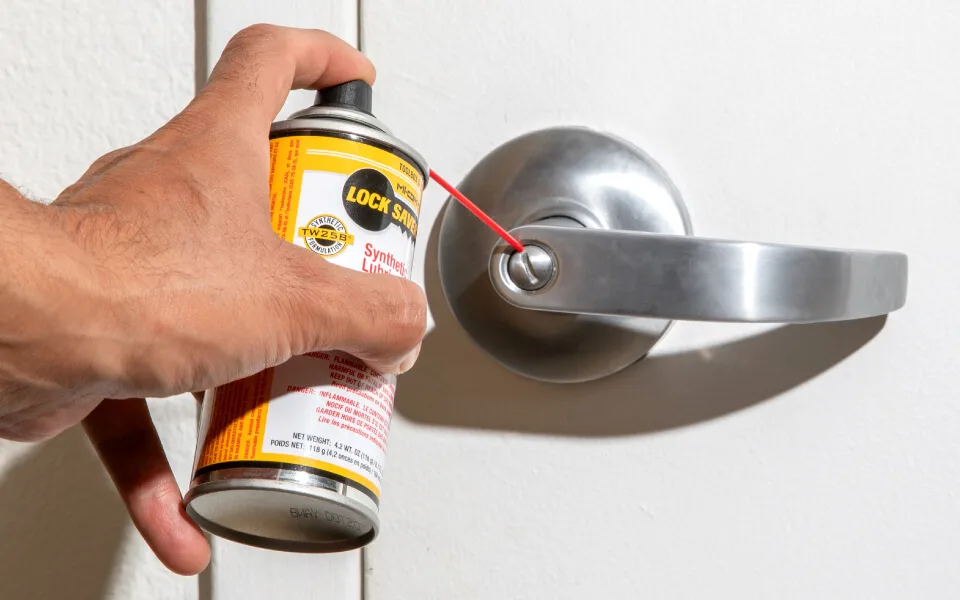
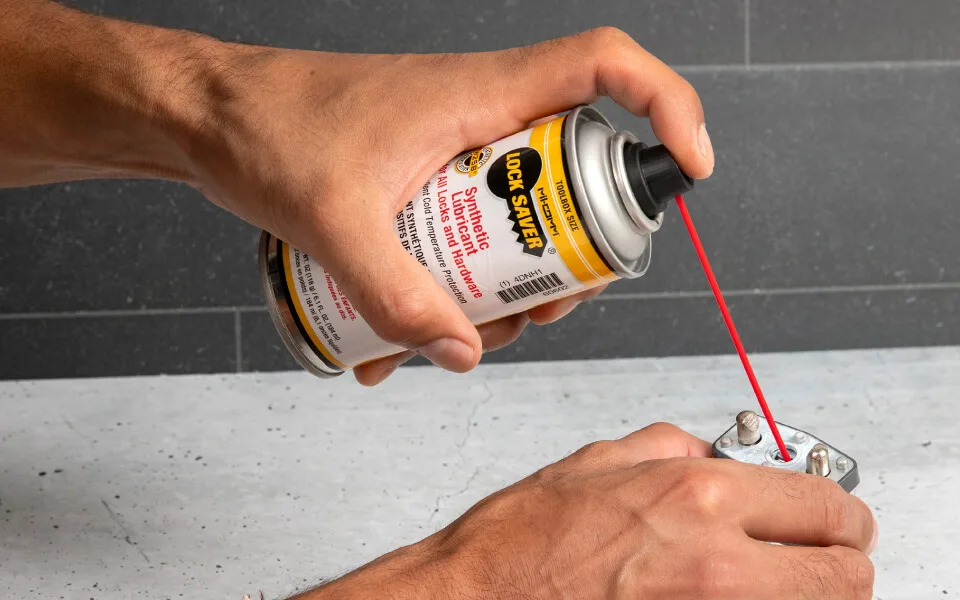
Lock Saver is in that last group. It is a synthetic lubricant, made with MIL-COMM’s TW25B formulation, that penetrates like an oil and then leaves a semi-dry protective film, so it reaches the pins without turning the keyway into a dust trap. The label calls out cold temperature protection.
Whatever you use, the method matters as much as the product. See how to lubricate a lock step by step and the other lock lubricant types compared.